

Dairy Farms
Improve pasture performance. Increase utilisation. Lift milk production.
More Feed/More Milk/Less Waste
Built for NZ dairy systems. Proven on farm.
The Reality on Farm
Every farm’s different — but the pressure points are familiar:
Maintaining average pasture cover
Preserving pasture quality through stress periods
Managing growth through dry periods, cold snaps, and wet conditions
Reliance on supplementary feed
That’s where production targets are made — or lost.

🚜 Where the Opportunity Is
Gains can come from improving how efficiently pasture is:
Grown (kg DM/ha)
Utilised (grazed vs residual)
Converted into milk (MS response)
Small improvements across each of these areas compound into meaningful increases in milk solids per hectare.
🌱 Where Biozest Fits
Biozest works at the pasture level, supporting plant processes that influence pasture growth, recovery, and feed quality.
It is not a fertiliser, microbial, or hormone product.
Instead, it interacts with natural plant pathways associated with:
growth and recovery
structural development
stress response
This supports more consistent pasture performance across varying conditions.
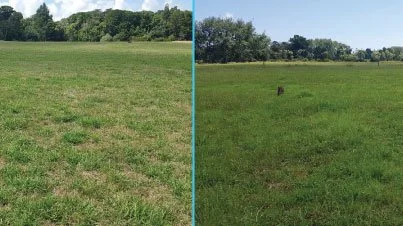
🐮Beyond Growth Alone
Biozest activates the plant’s phenylpropanoid pathway, this triggers natural plant compounds that support pasture growth and are also linked to:
plant resilience
structural integrity
feed quality
In pasture systems, this can contribute to:
increased pasture palatability
improved pasture utilisation
more consistent animal performance
improved conversion of feed into milk
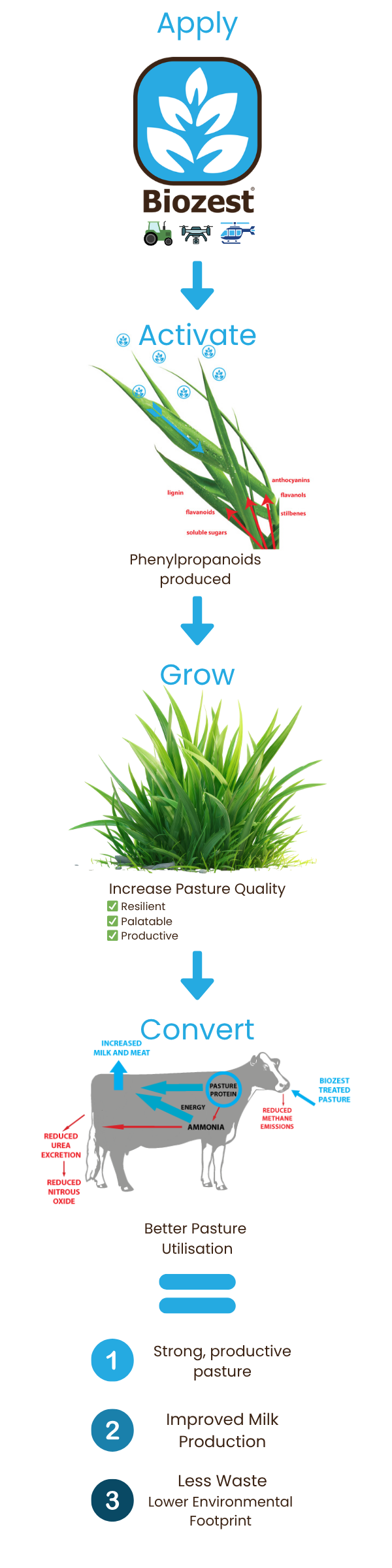
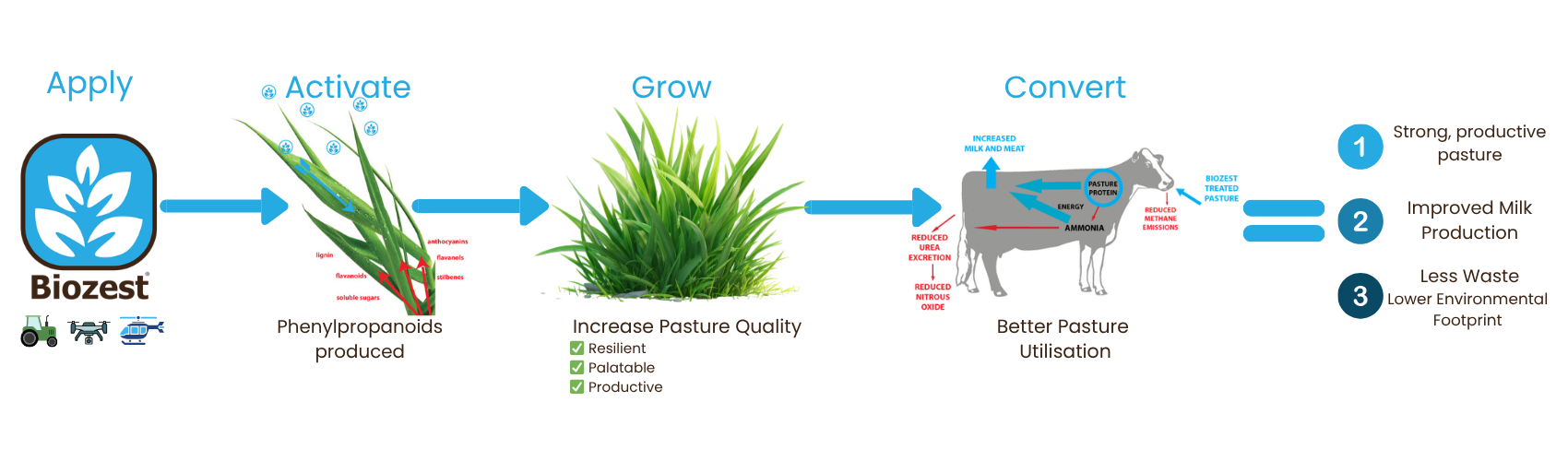
From Pasture to Milk - Where Biozest Makes the Difference
Proven Results on NZ Dairy Farms
Up to +89% pasture growth (split paddock trials)
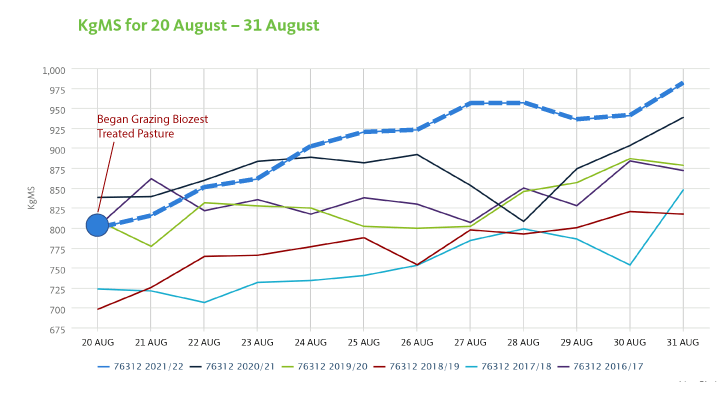
+8.5% milk solids (commercial herd data)
24–36% reduction in nitrogen loss (urine urea)
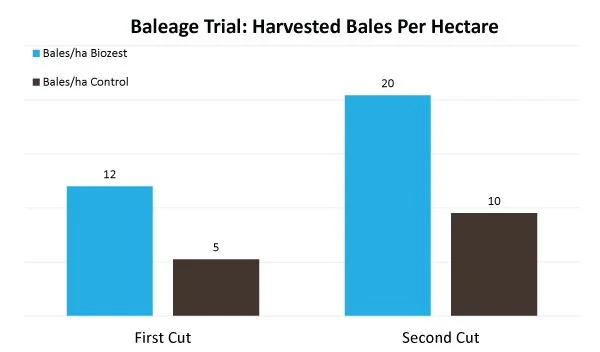
Double baleage yield
Improve pasture performance in stress conditions (frost, drought and water-logging).
+31% of milk volume and 33% of milk solids (dairy goats).
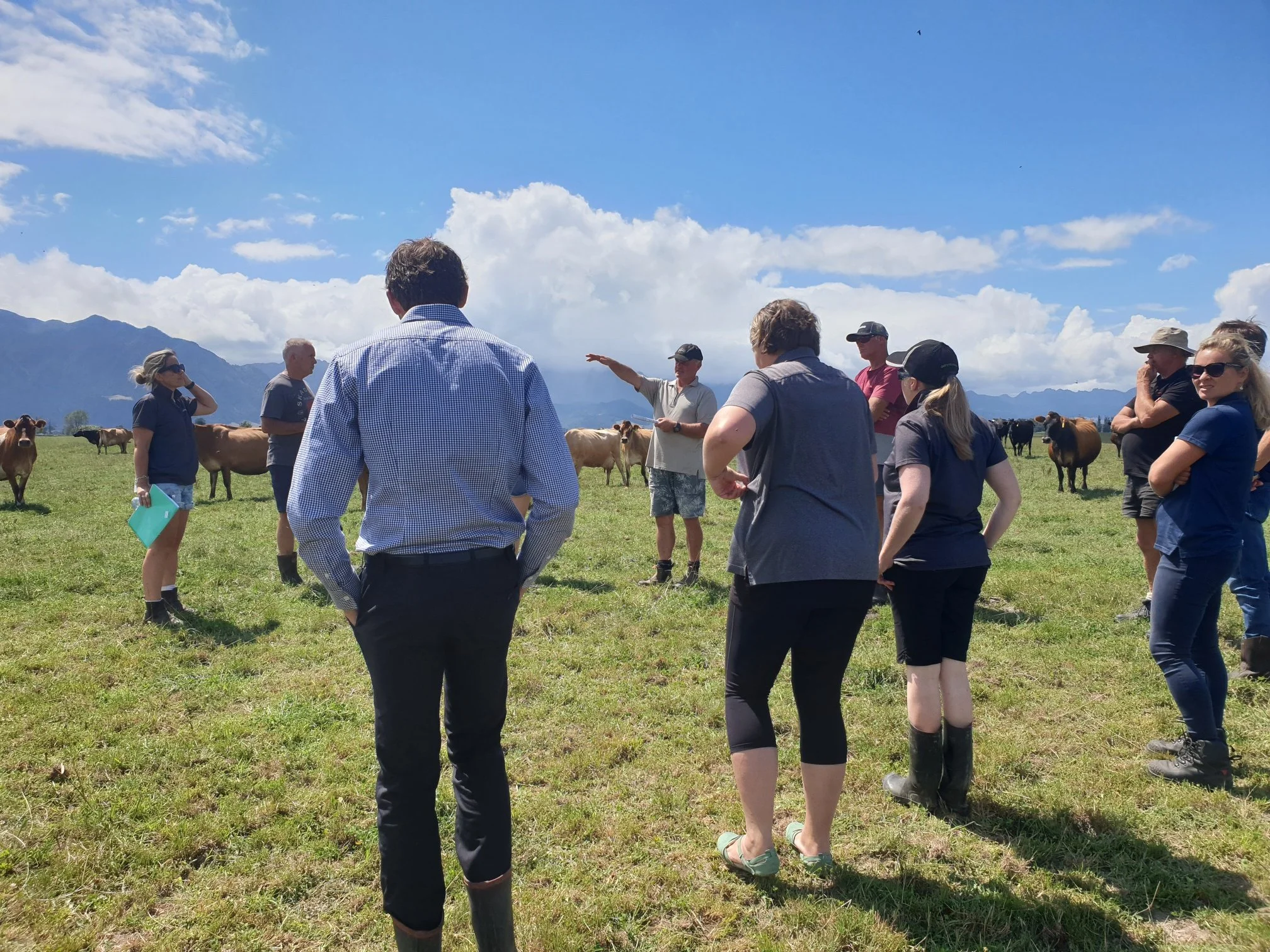
“We have seen a 3% increase in MS production this season compared to last year which was a record for us.”
— Andrew and Jenny McGiven, Te Aroha.
Pasture
More consistent growth rates
Improved recovery from stress/extreme weather
Better maintenance of pasture quality
On-Farm Impact

Cows
Improved pasture intake
Higher milk production
Improved utilisation of available feed
System
Increased milk solids
Improved feed efficiency
Reduced environmental footprint
Biozest is designed to fit within current farm practices:
Applied using existing spray equipment (ground or aerial)
No withholding period
Suitable across pasture types and farming systems
Easy Integration on Your Farm
Application
Rate: 1L/ha
Apply as part of routine spray programmes
Repeat as required depending on seasonal conditions and desired outcomes

-
Strategic Programme (Dairy)
Start with two applications, then use as needed to maintain feed supply, manage stress (e.g. drought or frost), and lift pasture quality and yield.
Application guide:
Rate: 1 L/ha (in 20–500 L water)
Start: 2 sprays, 3–5 days apart
Ongoing: Apply seasonally or as conditions require
Hay & Silage:
Apply twice before paddock lock-up.For second cuts, reapply 3–5 days after the first cut.
Full Programme (Dairy Pasture)
For maximum, year-round performance in pasture growth, feed quality, and milk/meat production, a full programme is recommended.
Application guide:
Rate: 1 L/ha (in 20–500 L water)
Start: 2 sprays, 3–5 days apart
Ongoing: Apply 3–10 days after each grazing
Which programme is right for you?
Choose Strategic if you want to:
Respond to feed shortages or pinch periods
Support pasture through stress (dry, cold, recovery)
Boost specific events like baleage or silage
Trial Biozest with lower upfront commitment
Choose Full Programme if you want to:
Drive consistent, year-round pasture performance
Maximise feed quality and utilisation
Support milk/meat production at a system level
Build resilience and reduce variability across the season
Simple rule of thumb
Strategic = reactive, targeted use
Full programme = proactive, system-wide performance -
Fill sprayer tank with water.
Shake Biozest container several times to reconstitute content.
Add Biozest & rinse container into tank.
Agitate thoroughly before spraying.
Compatibility with additional products must be tested prior to application.
Biozest can be applied using any spray equipment: knapsack sprayers, C-Dax, Tractor, Tow and Fert, Blast Sprayer or Helicopter (water rate may be as low as 20 litres per hectare when applied via helicopter).
The water rate can be varied to suit your spray equipment – the application rate should always be 1 Litre of Biozest per hectare.
Biozest should be applied to pasture that is as dry as possible.
Biozest is effective on contact so it is not a problem if it rains immediately after application.
If the pasture is damp keep the water rate as low as possible.
Spray today. Graze today. No worries.


Biozest is safe, easy to apply, and leaves no residue - with zero withholding or waiting period. Spray your pasture and put the cows straight back on.
It’s approved for use across all farming systems - biological, regenerative, organic, or conventional - and is exempt from MPI’s ACVM registration.
Certified by BioGro, Biozest is trusted by organic producers and practical farmers alike. No red tape. No downtime. Just smarter pasture.
Farmer Testimonials
-

Mike Walsh, Opunake
“Man alive, did I see some results,
Growth was up to 30kg of dry matter a day, compared with 10kg to 15kg normally.
"The grass just took off. Everything grew, clovers and all"
-

Jeff Graham, Pukeatua, Waikato.
"Biozest helped us take our milk production from 33,000kg milk solids to 44,000 with the same number of animals.
The goats processed grass more efficiently. Llab tests show urea excretion reduced by 37%"
-

Stuart Aspin, Taupo
“Biozest helped me to produce an extra 60 tonnes of silage"
It also has animal health benefits because the cows are extracting more from what they were eating”