
Vine Decline Syndrome
Spot early signs, avoid unnecessary fertiliser, and support vines to recover and produce high quality fruit.
Kiwifruit vine decline syndrome (VDS) is becoming a bigger problem in orchards across New Zealand.
Scientists are still studying what causes kiwifruit vine decline, including possible pathogens. But right now, it looks like the health of the vine itself plays a big part. That means there are things you can do now to help reduce the impact of VDS.
Stressed vines are more vulnerable to vine decline, reduced yields, and lower OGR
Keeping a close eye on vine health will help you improve fruit quality & vine health and reduce production costs.
What to Look for
Walk your orchard
We recommend you walk through your orchard or find a vantage point where you can get a clear view over the canopy.
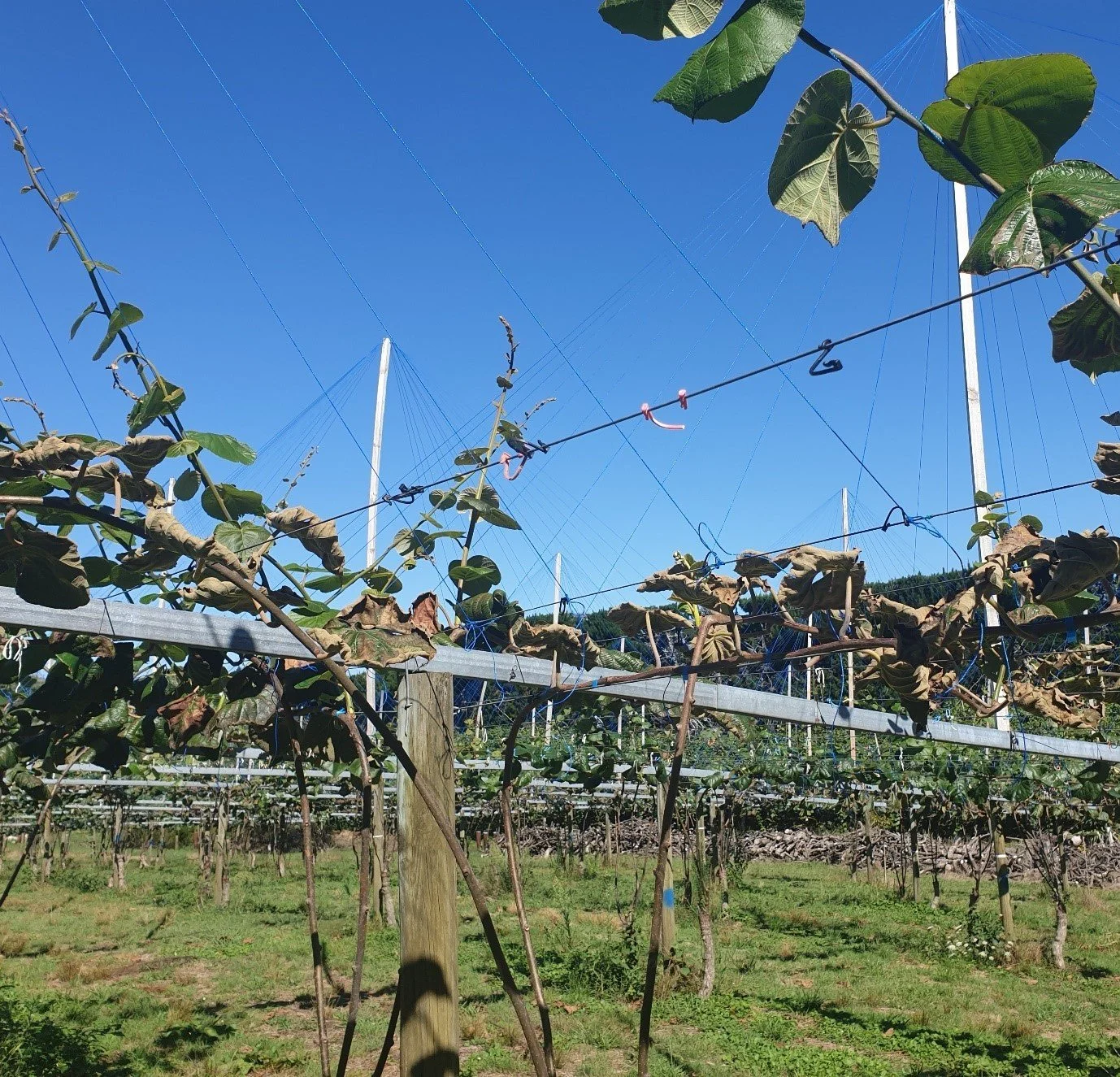
Look out for any gaps, yellowing foliage, or premature leaf drop.

As you can see in the image above, parts of the canopy are yellow, indicating poor leaf health. This orchard may experience early leaf drop and these areas should be checked carefully for signs of stress. This orchardist plans to use Primazest and Agrizest next season to reduce stress and maximise returns.
2. Inspect overall leaf condition. Focus on older leaves which will show signs of breakdown first.
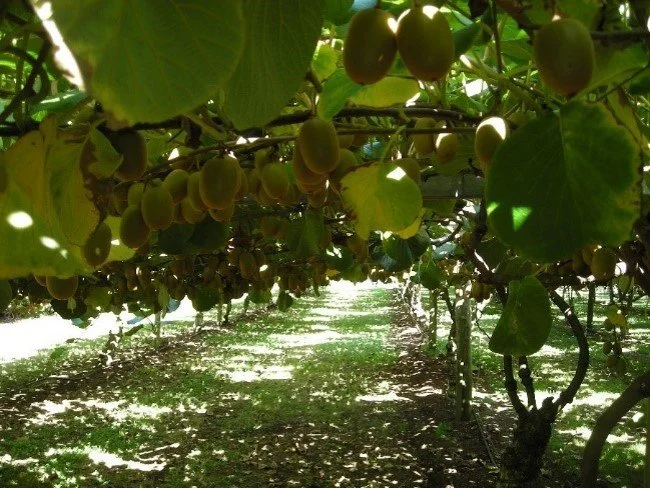

Premature leaf fall allows light to penetrate and, where leaf fall was very early, grass has grown.
3. Check the main leaders and trunks for signs of swelling, cankers, dieback, or other irregularities.
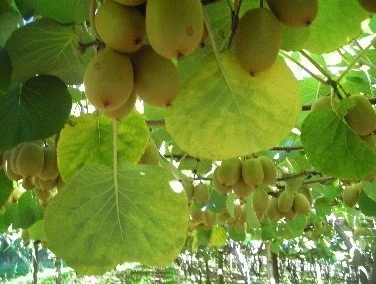
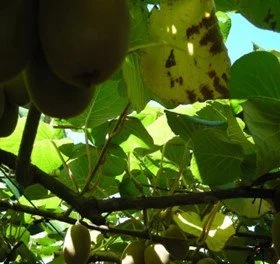
Standard management: note the leaf necrosis.
The symptoms of vine decline will be easiest to spot in green kiwifruit where necrosis follows a specific pattern between the veins. Young leaves may still look healthy:

Necrosis in Hayward Green Kiwifruit

Advanced yellowing in G3 Gold Kiwifruit
Advanced leaf necrosis
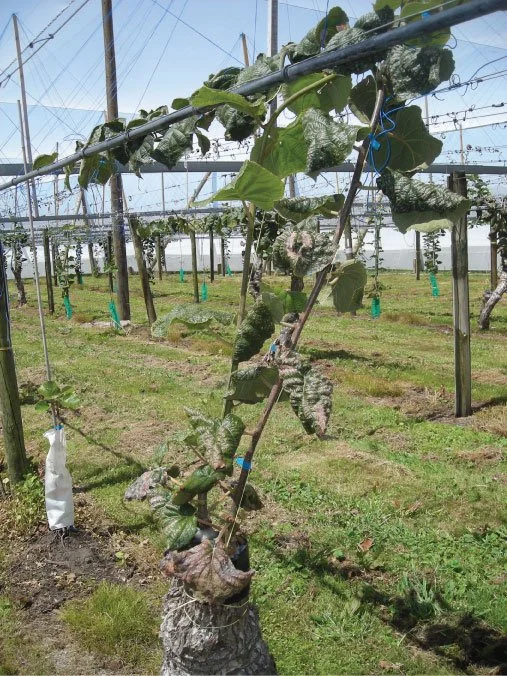
Young grafts may also be affected:

Vs healthy vines, treated with the Primazest programme only. no copper, or antibiotics post bud-break:
Many growers assume poor leaf condition and weak vines to be the result of nutrient deficiency and apply more foliar nutrients and fertilisers.
Unfortunately this only aggravates the problem in both producing vines and in newly grafted orchards.
So what should you do?
Sort out fertiliser and copper first
Check soil and leaf tests and only apply fertilisers when soil tests show a deficiency.
Be careful with copper: stop using it after budbreak and try to avoid building up copper in the soil where it can become toxic to your vines.
Stop foliar nitrogen sprays unless tests show a clear need and wait to add potassium until soil tests say it’s needed.
Apply foliar magnesium only when soil potassium is high.
Remember nutrients interact - too much of one nutrient can cause deficiencies in others (e.g. high nitrogen can limit uptake of boron and potassium). You can have too much of a good thing.
These steps help keep vines healthy and productive year after year.
With climate stresses adding new challenges, it’s more important than ever to take a careful, science-informed approach.
2.Reduce Stress and Support Vine Resilience and Recovery
Even with fertiliser corrected, stressed vines can struggle to bounce back on their own. That’s where Primazest and Agrizest fit.
How Agrizest and Primazest help:
Use Primazest on young vines/grafts and on early season growth to reduce stress and promote a strong, healthy start to the season.
Use Agrizest before and after flowering to reduce stress, optimise vine health and yield, improve fruit quality, reduce rejects and significantly increase orchard gate returns.
You Can Manage This
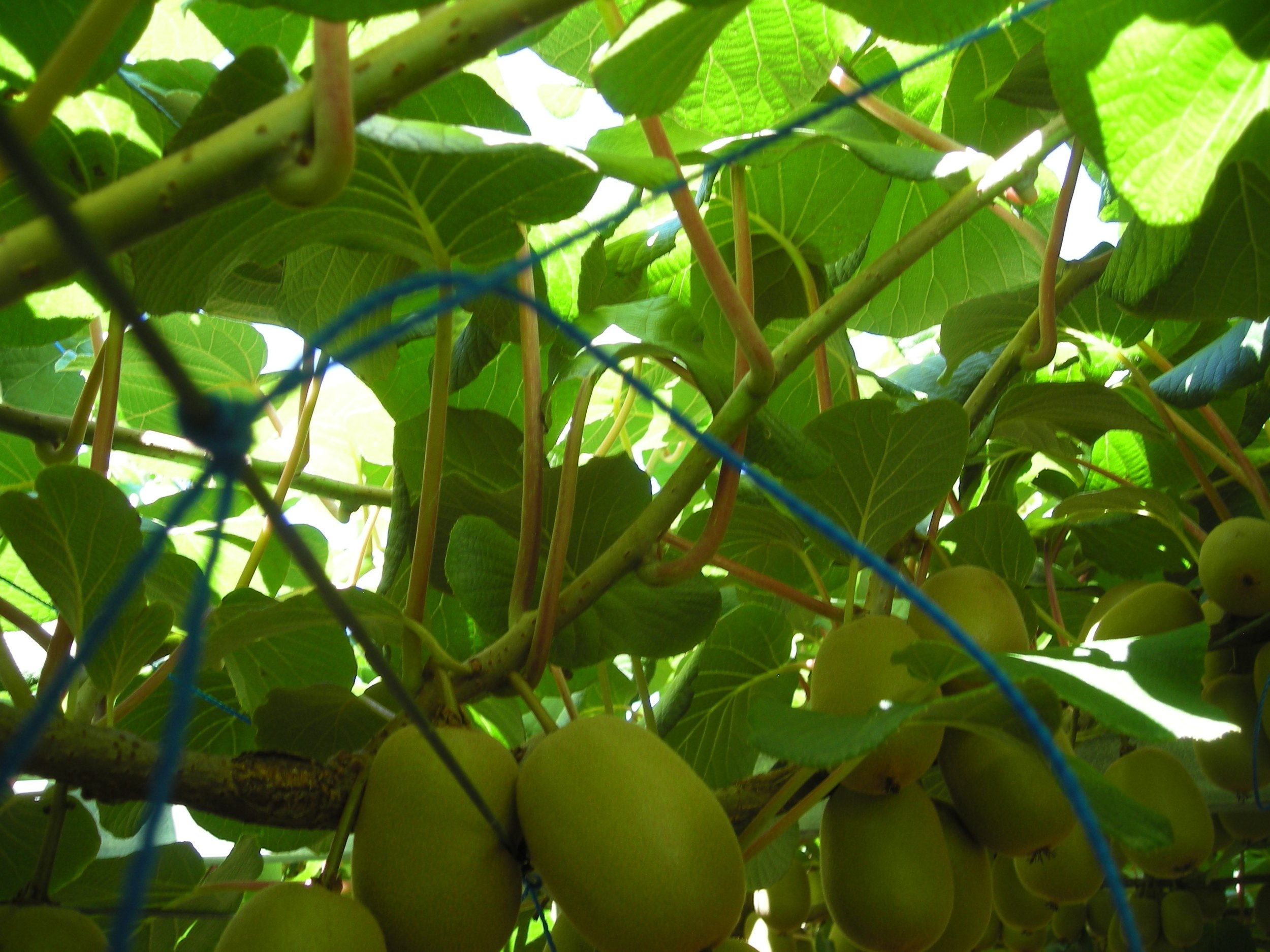
In this orchard, the grower has used the Primazest & Agrizest programme for 15 years with no foliar nutrients, copper, or antibiotics post bud break
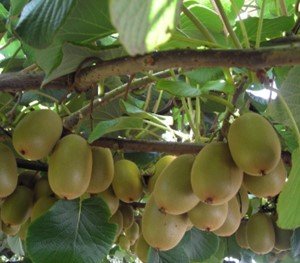
And in this young, grafted orchard the orchardist has used the Primazest programme only.
No other nutrient sprays or applications of fertilizers.
NO copper or antibiotics post bud break.
New Season Checklist:
Review your fertiliser programme—remember, even beneficial inputs can be overdone.
Check your soil and leaf test results: Aim for the medium range, not the high end.
Walk your orchard, look for signs of stress.
Take proactive measures on your orchard to keep your vines healthy and productive.
Read more about fertiliser use in kiwifruit orchards and the potential effects of over-fertilisation on fruit quality here.